The latest release of Domat’s integrated development system, Domat IDE, brings native MQTT 5.0 protocol support, giving building automation integrators another standardized tool for rapid integration with cloud platforms and IoT devices – with zero licensing fees or limitations.
For system integrators working on modern building automation projects, protocol flexibility matters. Buildings today need to talk to more than just HVAC controllers. They connect energy meters, environmental sensors, cloud analytics platforms, and third-party management systems. That's where MQTT comes in – and why Domat Control System has implemented it natively in the latest version of Domat IDE.
MQTT (Message Queuing Telemetry Transport) has become the de facto standard for IoT communication. Originally developed in 1999 for monitoring oil pipelines over satellite networks, it's now deployed in everything from smart factories to connected vehicles. The protocol's lightweight design – with just a 2-byte header – makes it ideal for bandwidth-constrained environments and resource-limited devices.
Unlike traditional master-slave protocols like Modbus, MQTT uses a publish-subscribe architecture. Devices connect to a central MQTT broker, publish data to topic channels, or subscribe to receive updates. This decoupled design means publishers and subscribers don't need to know about each other – the broker handles all message routing. For building automation, this translates to faster commissioning, easier scalability, and simpler integration with cloud platforms like AWS IoT Core, Microsoft Azure IoT Hub, or Google Cloud IoT.
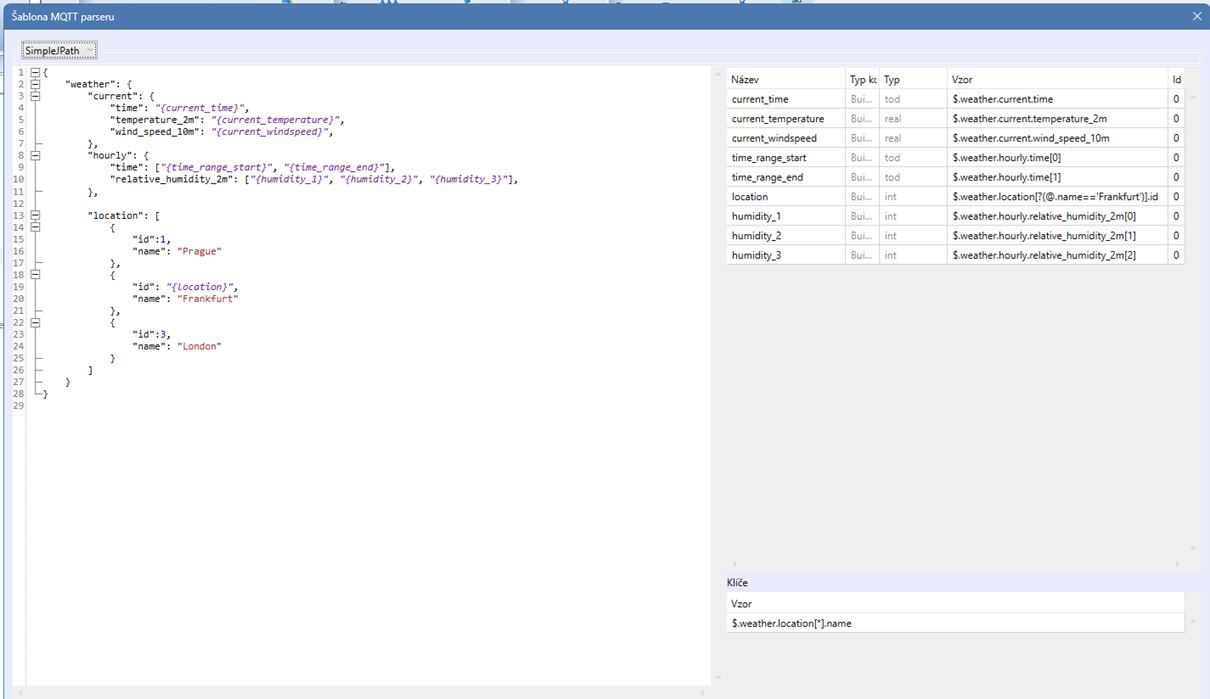
Petr Hylmar, Head of Research & Development at Domat, explains the implementation challenge: "Implementing the MQTT 5 standard at the application layer was routine work for our developers. But designing a user-friendly and universal message content processing system was the real challenge. Thanks to that, we can now easily receive and send data from diverse systems across multiple vendors."
The practical benefit for system integrators is straightforward: MQTT enables remote commissioning without direct device access. The MQTT client connects to a broker and exchanges data automatically. Multiple platforms can process this data, making it simple to integrate building automation data with energy meters, remote sensors, and other equipment.
Jan Vidim, Head of Technical Support, highlights the operational impact: "Integrators and service teams will appreciate that commissioning via MQTT takes minutes. And when it works right away, support has less work and customers have fewer concerns." MQTT is a standard protocol used for rapid integration where direct device access isn't required – the client connects to the broker automatically and communicates data. There are numerous data processing platforms available, so building automation system data can seamlessly integrate with energy meter readings, remote sensors, and other devices.
Security is non-negotiable in building control systems. MQTT supports TLS/SSL encryption, certificate-based authentication, and Access Control Lists (ACLs) for authorization. The protocol also offers three Quality of Service (QoS) levels, ensuring guaranteed message delivery based on application requirements.
František Polívka, Head of Sales, sees MQTT as a natural evolution: "We view MQTT as a natural step in our systems' evolution. It enables secure data transmission over encrypted connections, works even in challenging networks, and ensures today's installations will be ready for future integrations. That's exactly the kind of stability our customers expect from us. When we invest in new technologies, it has to make sense for our customers too. MQTT does exactly that – it opens access to data that previously stayed trapped on local fieldbus networks. Customers can more easily develop their own solutions and add value beyond standard automation. For us, openness isn't just a slogan – it's how we protect our customers' investments long-term."
Domat systems offer a wide portfolio of communication protocols suitable for building automation, energy management, and special applications. Natively in PLCs, Domat supports open standards including BACnet/IP (ISO 16484-5:2016), Modbus TCP and RTU, and (through Domat OPC Server) OPC UA. The latest addition is MQTT version 5.0, enabling direct cloud and IoT integration without any license fees. For energy and remote control, Domat also provides support for IEC 62056-21 and IEC 60870-5-104, widely used in metering and utility telemetry. Domat's proprietary protocols SSCP (for process stations, commissioning, and horizontal communication) and SoftPLC Link (for SoftPLC-to-SoftPLC data exchange) complete the range for internal communications.
With Domat-produced hardware converters it's possible to integrate additional protocols directly into the system, such as M-Bus (using R095/R096 converters for energy meters), DALI (using R091 converter for digital lighting control), and DMX512 (with R065 converter for stage and effect lighting applications). In specific cases, proprietary protocols of other manufacturers, like P-Bus for older Landis & Gyr I/O modules (using Domat converters R085/R086), can also be integrated.
Pavel Pavliš, Head of Turnkey Projects, describes the practical application: "In our turnkey implementations, this isn't necessarily a breakthrough, because we can already meet all standard customer requirements using the protocols we already support – both standardized ones and our SSCP protocol, which has its own advantages in many situations, especially regarding system security, user-friendliness, or simplification and speed of integration. However, MQTT protocol is increasingly appearing in customer specifications as an insurance policy for possible future expansions or system upgrades, which is definitely useful. We're currently waiting for the first opportunities where customers truly need to integrate system components using MQTT, so I'm glad we're fully prepared for future challenges."
Implementing MQTT support is definitely not the end point of Domat's development efforts. The company continues working on additional features in both software and hardware. The goal is to set the pace in the industry and provide customers with cutting-edge solutions based on open standards.
For system integrators who want detailed information about the new Domat IDE release and practical demonstrations of MQTT protocol usage, Domat has prepared an online webinar. The presentation will take place on Friday, October 31, 2025, at 14:00 CET and will be streamed live on YouTube. The program includes an overview of all new features, comparison of open protocols, practical integration tips, and space for technical questions. The recording will remain available on the Domat Control System channel.
More information about Domat Control System products is available on Domat’s website. You can also follow company profile on LinkedIn for updates and news. If you are interested in training, please contact skoleni@domat.cz or reach out directly to your sales representative.